This was driven by the Azure VMware Solution Product Group wanting our customers and partners to quickly and easily make Availability design decisions for the Azure VMware Solution.
Category: Architecture Design & Strategy
General Enterprise Architecture Design & Strategy
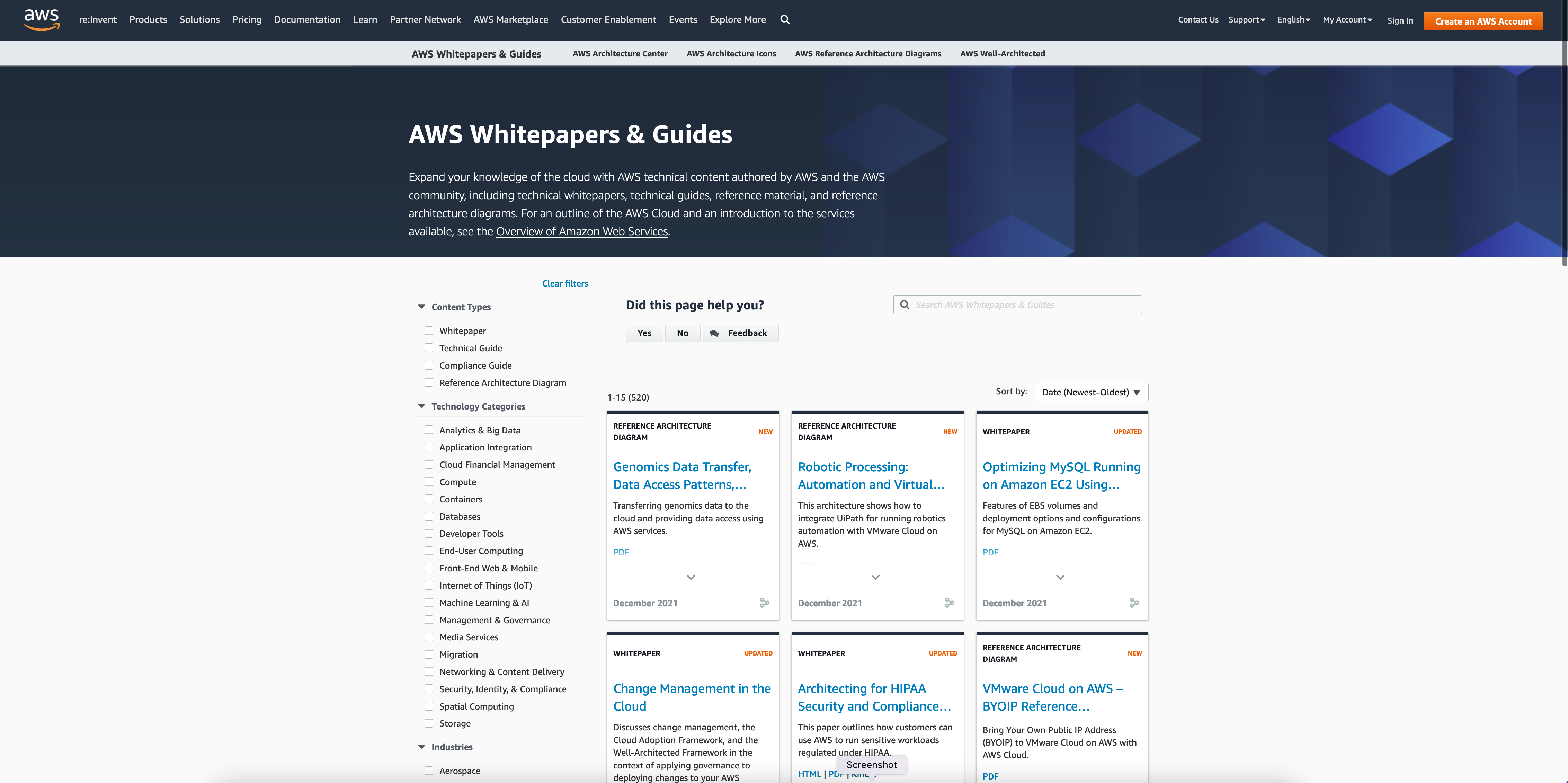
BYOIP to VMware Cloud on AWS Partner Network Blog Post Published
This was driven by AWS customers wanting to migrate hundreds of legacy applications into VMware Cloud on AWS that have a static public IPv4 address constraint. They could not use the DHCP function from Amazon’s pool of public IPv4 addresses that VMware Cloud on AWS supports.
For more AWS goodness, you can access the AWS Blog site, which includes blog posts for all learning levels, categories, industries and AWS products/solutions.

BYOIP to VMware Cloud on AWS Reference Architecture Published
This was driven by AWS customers wanting to migrate hundreds of legacy applications into VMware Cloud on AWS that have a static public IPv4 address constraint. They could not use the DHCP function from Amazon’s pool of public IPv4 addresses that VMware Cloud on AWS supports.
Advanced Design VMware Cloud Management & Automation 2021 Exam (3V0-32.21) Study Links
I took the Advanced Design VMware Cloud Management & Automation 2021 Exam recently and these are the study links I used:
- VMware Architecture and Design for Cloud Operations and Automation with VVD 6.2
- VMware vRealize Suite and vCloud Suite Licensing & Features
- VMware Validated Design 6.2 Release Notes
- VMware vRealize Operations Cloud Release Notes
- VMware vRealize Log Insight Cloud Release Notes
- VMware vRealize Automation Cloud Release Notes
- VMware vRealize Suite Lifecycle Manager 8.2 Release Notes
- VMware vRealize Operations Manager 8.2 Release Notes
- VMware vRealize Log Insight 8.2 Release Notes
- VMware vRealize Automation 8.2 Release Notes
- VMware Product Interoperability Matrices
- VMware Compatibility Guide
- Breaking down the conceptual design, RCARs and AMPRS …. VCDX style
- Visualizing the Conceptual Model for IT Architecture
- NOTE: Understanding the last 2 blog posts is essential to being effective in this exam.
VCDX – Modern Solutions
In the last month I have been involved in a few VCDX mocks. One of the things I have been explaining to VCDX candidates is the importance of being knowledgeable about modern infrastructure design and being able to articulate the business value.
List of articles in my VCDX Deep-Dive series (more than 90 posts)
The way the VCDX blueprints are written, you are encouraged to design a “Build Your Own” solution, which is the antithesis of cloud and the SDDC. Which leads to VCDX candidates following the “BYO” route without considering and understanding how automation, cloud and the self-driving SDDC functions and adds value to a customer.
Am I saying you need to be an expert in VMware Cloud Foundation and VMware Cloud? No, but I am suggesting that you need to be aware of it and be able to describe how it works and articulate the business value realized.
What “modern” VMware solutions am I referring to? Solutions such as the entire suite in VMware Cloud (vRA Cloud, Log Insight Cloud, Cloud Health, Tanzu, etc.), VMware Cloud Foundation (including VCF on VxRail), VMware Cloud on AWS (and all other hyperscaler VMware variants: Oracle, Microsoft, IBM, GCP, etc.), VMware vRealize Suite Lifecycle Manager, Horizon 7 on VMC on AWS/Azure, etc. And understand how the VMware Validated Design (VVD) framework relates to these solutions.
In my opinion, here are some suggestions on how you can weave this into your VCDX submission and the panel defense:
- Use the alternate design decision methodology in your VCDX submission to demonstrate your knowledge about a modern VMware design.
- As you are presenting your design to the panel, explain how a constraint stopped you from using a modern VMware solution, but elaborate on how it would work if that constraint was removed.
- Design a hybrid topology, where the public cloud technology is a data center extension or disaster recovery service, but keep the on-site component as “BYO” (the part that aligns to your VCDX track – e.g. DCV is vSphere).
- During the Design Scenario, blend modern VMware solution design elements into your talk track.
VCDX – Your Voice
As you go through the VCDX process, you will get a lot of feedback from your study group and the VCDX mentors you have mock sessions with. That feedback is a gift, you need it to evolve and grow the skills to be successful as a VCDX and an Architect. The trick is to take that feedback and incorporate it into your style of talking and presenting and make it yours. This includes filtering that advice and discovering what is best for you and what is not. I think of it as finding your “Voice”, the thing that makes you unique and is at the core of your identity as a person. And we are all different, what works for me, may not work for you.
List of articles in my VCDX Deep-Dive series (more than 90 posts)
Finding your voice takes time and effort. And making major changes to how you do things at one time should be avoided. You want to improve your game one step at a time. If a minor change works, keep it, if not, discard it and then move onto the next improvement.
During the mocks I was involved with in the past month, one of the candidates was asking me about how much information to share during the defense to reduce the “attack surface”. On this subject I have changed my mind over the years. My current thinking: if you know a particular subject or technology in-depth, you should talk about it and showcase your knowledge to the VCDX panel. Let them ask all the questions they want and if you do not know, then say so; you are there to demonstrate your skills and knowledge. For me personally, I have always found the process of “stepping around” certain subjects interrupts and impedes my flow, so it is better to just go for it and let the chips fall where they may.
NPX – The Right Hypervisor
I was talking to some potential NPX candidates the other day and I was describing the strategy for selecting the correct hypervisors for the NPX Design Review (NDR). Nutanix is a hypervisor agnostic platform, you can use ESXi, Hyper-V, AHV (KVM-base) or Citrix (for Citrix VDI only). The NPX candidate needs to choose two hypervisors as part of the NPX application form, one hypervisor for the NPX design submission and the second hypervisor for the NDR design scenario and the NDR hands-on scenario (troubleshooting). You cannot use the same hypervisor for both parts of the NDR (with the exception of a multi-hypervisor design submission, then you can choose what you want – thanks to Artur for this clarification).
The NPX Link-O-Rama is a great resource for all things NPX, including this applicable list of articles in my VCDX Deep-Dive series (more than 90 posts).
The Nutanix Acropolis Hypervisor (AHV) has come a long way in the 5-years since it was released, including the Nutanix hybrid cloud products that have become available during that time (e.g. Nutanix Era, Karbon, Objects, Clusters, Calm, Flow, Files, Leap, Beam, etc.). With that thought in mind, my recommendation to anyone considering the NPX journey would use AHV as the hypervisor of choice for the design submission. The reason being, using a third party hypervisor with Nutanix is incredibly complicated and you have to worry about integrating and customizing the technologies of two vendors just to get the on-site SDDC functioning correctly.
For example, if you selected VMware vSphere as the hypervisor, consider the complexity of the design to address the advanced ESXi settings, the deployment of vCenter Server (Nutanix Foundation does not automate this, only the ESXi/AOS imaging process), the customization of vCenter Server, the use of NSX-T for micro-segmentation, the advanced operational procedures to capture that complexity, etc.
With Nutanix AHV, you do not have this problem, Foundation images the nodes with Prism included as an AOS service, Prism Central is a multi-cluster manager and advanced operations manager, Nutanix Flow provides micro-segmentation (as a Prism Central service) which AHV natively supports and so forth. Using this strategy would significantly reduce the complexity of the design and decrease the number of hours needed creating the submission documents. Which makes sense, because Nutanix is all about customer delight and simplicity.
If you follow this strategy, you still need to demonstrate mastery of the second 3rd party hypervisor during the NDR design and hands-on scenarios, however you only need to talk about it, not write about it; which is a big difference.

