Book 4 of the IT Architect Series announced

The IT Architect Series is getting ready to release their 4th book in the series titled “Stories from the Field – Horror stories and lessons learned from IT Architects, Operations and Project Management.” This effort was led by Matthew Wood, John Arrasjid and Mark Gabryjelski with a total of 34 stories from 34 contributors. The contributor list is a who’s who of vCommunity, vExpert, Nutanix NTC, VCDX, NPX and DECM-EA certified individuals. If you want to learn from the mistakes of the best, this book is for you.

Each story is tagged with Topic Codes that assist the reader in locating their areas of interest. The chapters are consistently structured to explain the What, How, Why, etc. for ease of reading.

The impressive cover art was designed by Ioannis Dangerous Age.

When this book is released, you will be able to buy it as an eBook or printed copy. Keep on eye on the IT Architect Series site for updates.

The other books available in the IT Architect Series are:

Not Quite Right Infrastructure Platforms

Have you worked with infrastructure platforms that were not quite right? Niggling little annoyances that do not impact delivering services but add that extra effort to get your job done? Things like self-signed SSL certificates, local user accounts and naming standards that make no sense.

These things translate into technical debt, that additional friction that makes it harder for an operations team to do their jobs effectively. When we add the time lost over the years the solution runs for, this amounts to hundreds of man-hours. The amount of effort to fix these things after an infrastructure platform is in production is so much harder than taking care of it when the platform was being built.

My message to the delivery architects and delivery engineers out there, as you are deploying your solutions, ensure you are making your infrastructure platforms as easy to own and operate as possible. Considerations such as:

  • SSL certificates from the company Certificate Authority: nothing screams “amateur” more than having to accept self-signed certificates in a Web browser. It only takes a little more effort to complete the CSR request and CER import process and this will save future operators years of mouse clicks to “Add Exception” for “Invalid Security Certificate” messages.
  • All infrastructure Syslog endpoints should point to a central Syslog server: Syslogs that are cached locally are of no use to you when that device is down for the count. A centralized syslog server gives you a time machine into holistically working out what happened with your entire infrastructure for a past event. Open Source Syslog servers like syslog-ng are free. If you are running vSphere, get licensed for vRealize Log Insight, the plug-ins for vSphere are built into the product.
  • All infrastructure management interfaces are integrated with AD and use RBAC via AD groups: Maintaining a bunch of local accounts with separate passwords for the different components of an infrastructure solution make no sense. Configure SSO for the entire solution, so that the operators can login using their domain credentials. Use AD groups for role-based access control, that way when a new employee joins the team, they are placed into the same AD group as their colleagues and they immediately have the access they need.
  • Common naming standard that is human readable: another pet peeve of mine, use a naming standard that applies to every facet of the infrastructure solution (App, Compute, Network, Storage, DR, Data Protection, Cloud, etc.). One that someone can read and instantly understand what they are looking at and does not require them to open a spreadsheet to decode an obscure alpha-numeric string.
  • Day-2 Lifecycle Management: most platforms now have some type of lifecycle management that allows the automated deployment of patches and updates. Design, build and test them as part of the solution. Do not leave this for the operations team to take care of after the fact. Things such as vRealize Suite Lifecycle Manager, vSphere Update Manager, Nutanix Lifecycle Manager. If you are designing a VMware SDDC, look at VCF with vSAN-Ready Nodes and VCF on VxRail or better yet, consider VMC on AWS. If you are going down the Nutanix route, take a look at Nutanix with AHV.

If you have other “Not Quite Right” examples, feel free to add a comment. Thanks for reading this far!

Which is better? VMware or Nutanix?

I get this question all the time – “Hey René, you are an expert on VMware, why do you bother with Nutanix?” or vice-versa, depending upon whether I am talking to a VMware or Nutanix employee.

And my answer is, “Well it depends upon the customer requirements, both vendors have great solutions.” Let me elaborate, generally speaking both companies have the following attributes:

VMware

  • Extensive product eco-system that is getting broader and deeper each year
  • Broad support for third party vendors
  • Loads of nerd knobs exposed for complex use-cases
  • Rolls Royce of software and features
  • Likes to lead by acquisition
  • VMware is over 20 years old

Nutanix

  • An obsessive focus on simplicity
  • Second to none customer support
  • Great choice for simple use-cases
  • Likes to build from the ground up
  • Nutanix is 10 years old

In summary, my advice to customers is this: If you have very simple use-cases, you care about vendor support and you want things to work with the minimum of fuss, then Nutanix with AHV should be on your list. If you have complicated use-cases, your infrastructure team loves fiddling with software settings and you have a broad range of third party integrations into the hypervisor, then VMware is the way to go. Both companies have a vision that they are currently executing and will deliver working solutions, it just comes down to what the customer is trying to achieve.

VMware CAL Advanced Architecture Course Overview

For the past two weeks I have been attending the VMware Center for Advanced Learning (CAL) Advanced Architecture course. This is a 9-day course with updates from each of the business units of VMware, including instruction on architecture design and presentation skills. It is intended to include VMware employees and VMware Partners.

The primary objective of the course is to “strengthen architecture & solution skills in VMware Senior Consultants, Architects and Partners by establishing a baseline and model to interact with VMware Customers, leading the discovery, design and effectively communicate VMware solutions”.

First, let me say, if you have the opportunity to attend (by invite only) then you should jump at the chance. I wish this course had been available when I started my VCDX journey in 2012. Hats off to the VMware team that is investing and developing this program, it is a monumental amount of effort.

If you are attending, be prepared for 14 hour days, every day ends with a knowledge test delivered via VMware MyLearn and homework that needs to be completed that day. Each day starts at 8am and officially ends at 6pm, but my team were typically finishing around 8pm. Long days drinking from the fire-hose, but well worth it.

Partners are required to sign an NDA, so you really do get the inside track of what VMware is thinking and where they are heading.

It is a competitive environment, you are grappling against each other as individuals and as teams (you are split into teams of four). The objective is to design a solution for a fictitious corporation and on Day-9, present your vision to the C-level of the customer (staffed by the instructors). You are scored on the presentation and your ability to collaborate as a team.

The course framework is constantly evolving, since they seriously consider the feedback of each class that attends the course. For CALAAC8 (8th delivery of this course in the USA), we were the first to see a beta financial module and a Day-2 Operations model.

The most impactful day for me was the Advanced Consulting and Presentation skills session (Day-6), where a consultant from Mandel takes you through the skills needed to be an effective presenter at the executive-level. It is amazing how 8-hours of training and practice can yield such massive gains. I should also mention the VMware Application Platform vision presented by Emad Benjamin which was thought provoking (Day-5).

For the people that are successful in passing the Advanced Architecture course, they receive CAL Alumni membership and a Digital badge in Acclaim. They are also included in WebEx updates for the VMware strategy moving forward.

Those of you interested in attending this course, these are the upcoming dates (contact your VMware Manager or Partner Manager to be nominated):

  • IG3 – July 9-19, 2019: Paris
  • IG4 – August 6-16, 2019: Hong Kong
  • CALAAC9 – September 9-19, 2019: Palo Alto
  • CALAAC10 – October 14-24, 2019: Palo Alto
  • IG5 – November 12-22, 2019: Hong Kong
  • CALAAC11 – January 13-24, 2020: Palo Alto

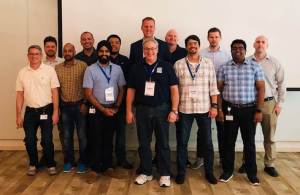
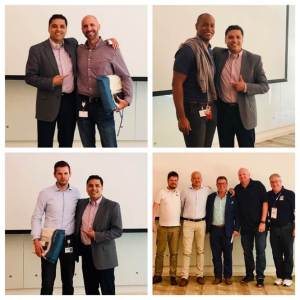
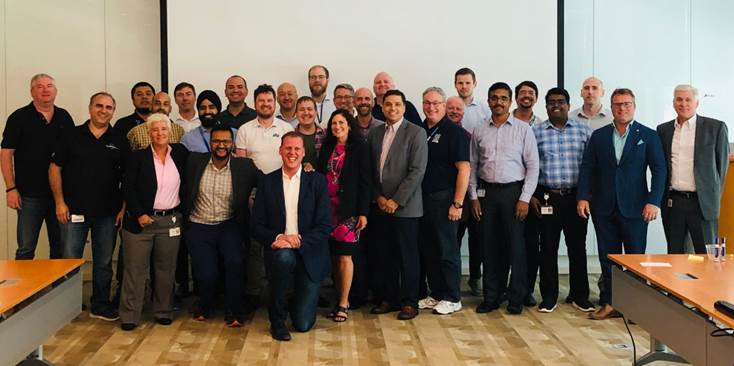
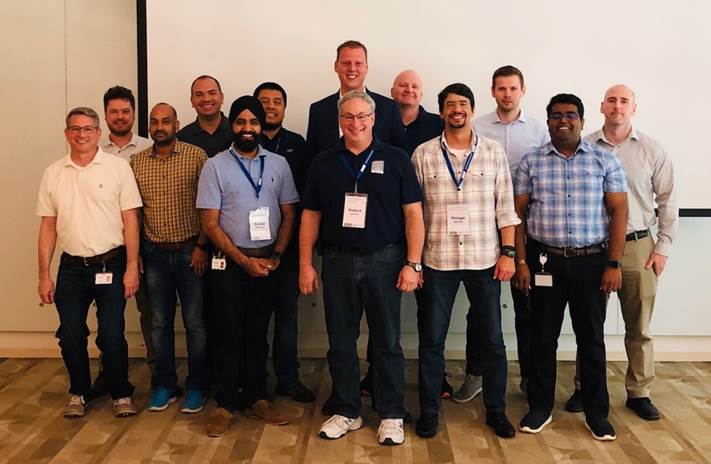
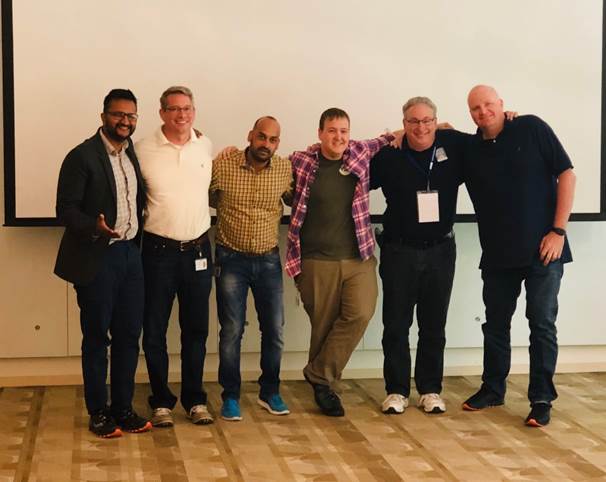
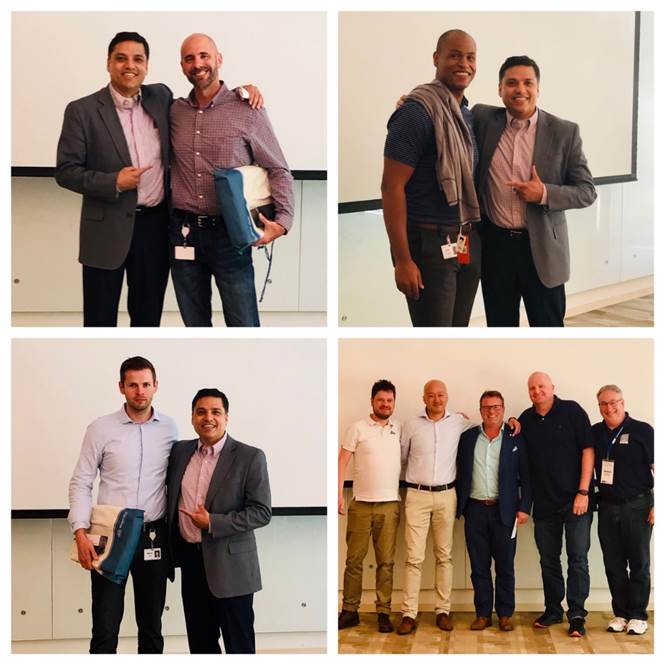
Here are some photos from CALAAC8 (low resolution – do not have the high resolution files), I was lucky enough to win the Individual Contributor award and to be a part of the winning Team.

Other Resources:

The Nutanix Design Guide

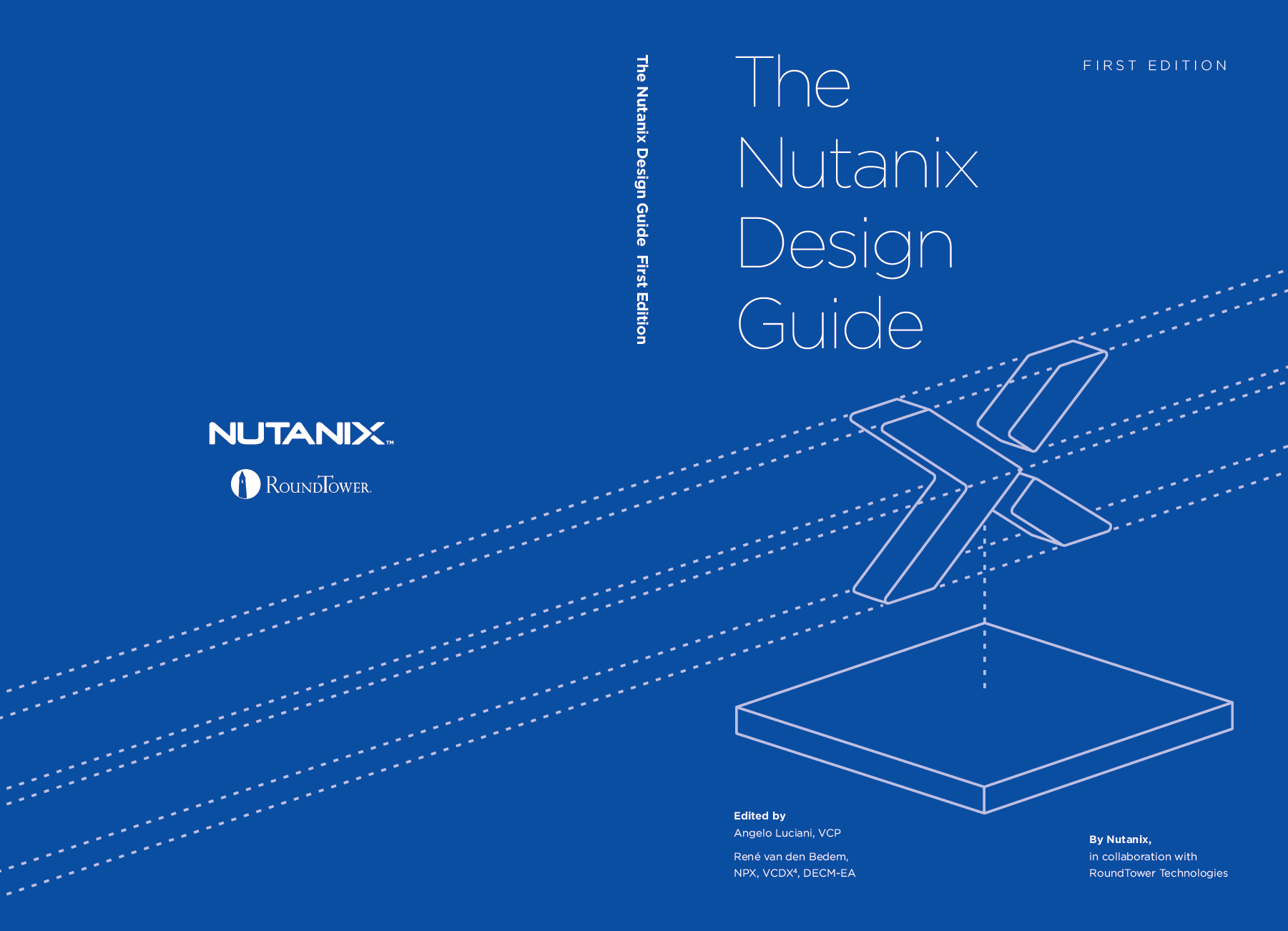
Since October last year, RoundTower Technologies has been collaborating with Nutanix on the First Edition of “The Nutanix Design Guide”. This book was written to explain the “Why?” of Nutanix and to present a 40,000ft view of the Nutanix Enterprise Cloud eco-system. This book has something for everyone, even if you have just been introduced to Nutanix or are an experienced Nutant. At 264 pages, this tome has a pleasing weight, when held in your hand.

It was a community effort, with Angelo Luciani and myself as co-editors/co-authors and 15 other Nutants authoring content (including 6 NPXs) to complete the final book. Dheeraj Pandey was also kind enough to write the Foreword. We are incredibly proud of the final product which included hundreds of hours of collective effort. Listen to this Nutanix Podcast Episode to hear more.

How do you get a copy?

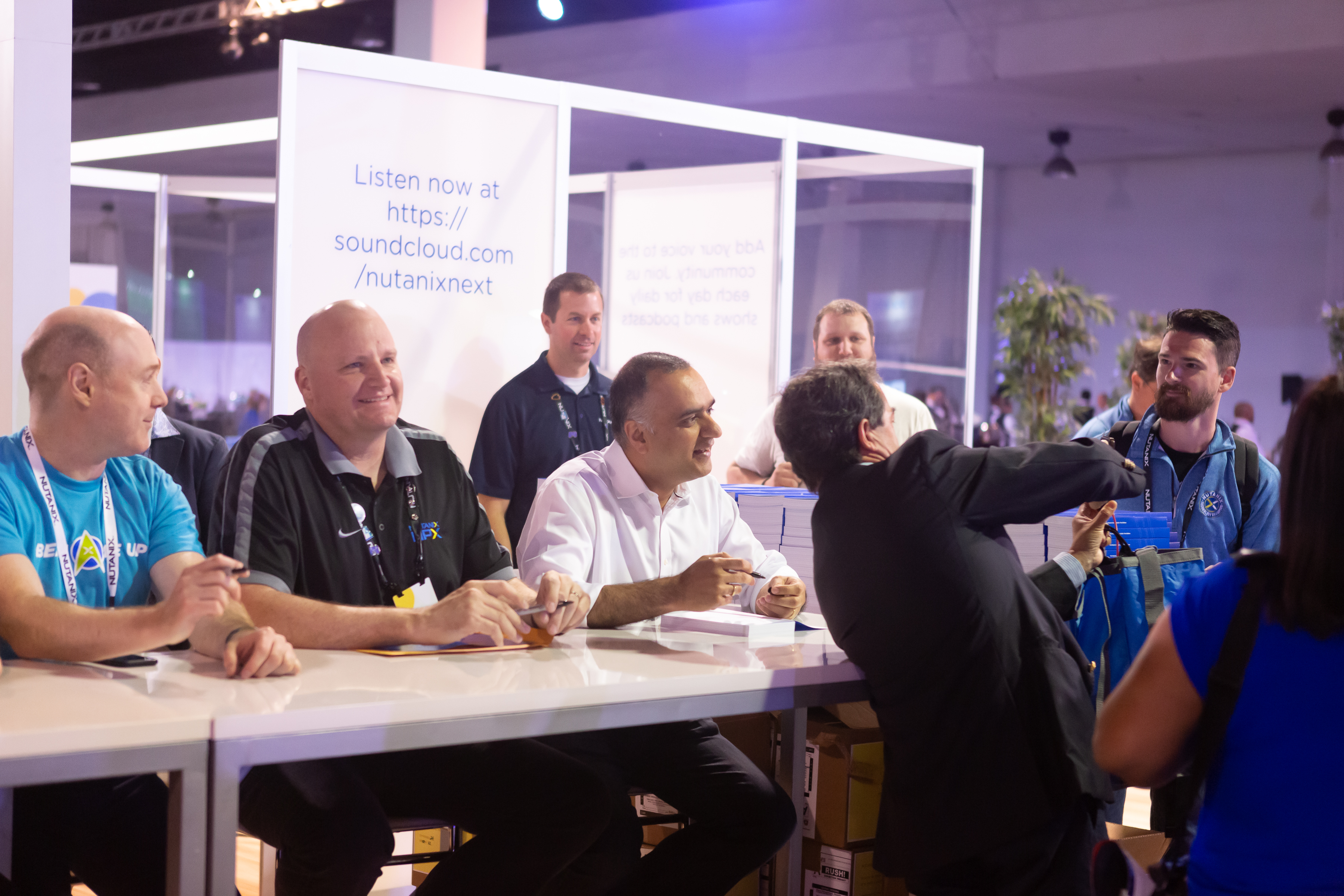
Easy, a physical copy will be provided at strategic locations around the event when you attend Nutanix .NEXT US in Anaheim (there will be a book signing on the Wednesday with Dheeraj and team) or contact your Nutanix/RoundTower Account Executive for a copy.

DOWNLOAD THE NUTANIX DESIGN GUIDE – FIRST EDITION PDF

You are most welcome! We hope you find value and enjoy reading it.

VCDX – The Zone

Have you ever been walking up a set of stairs and when you think about what your legs are doing, you stumble and have to grab the handrail to save yourself from falling? Defending VCDX is the exact same thing, on the day of the defense you want to be in “the zone”, going with the flow, thinking on your feet and making it happen. You want to let your subconscious take control and perform the task at hand.

Continue reading VCDX – The Zone